
{主关键词}
美国恐怖故事第二季
Eight major polysilicon producers in China pledge to avoid below-cost sales amid ‘anti-involution’ push_我的网站

一 |
[ 资讯]. 日前,乘联会预计6月狭义乘用车零售总市场约为200万辆左右,同比去年增长13.4%,环比上月增长3.2%,其中新能源零售预计可达110万,渗透率提升至55%左右。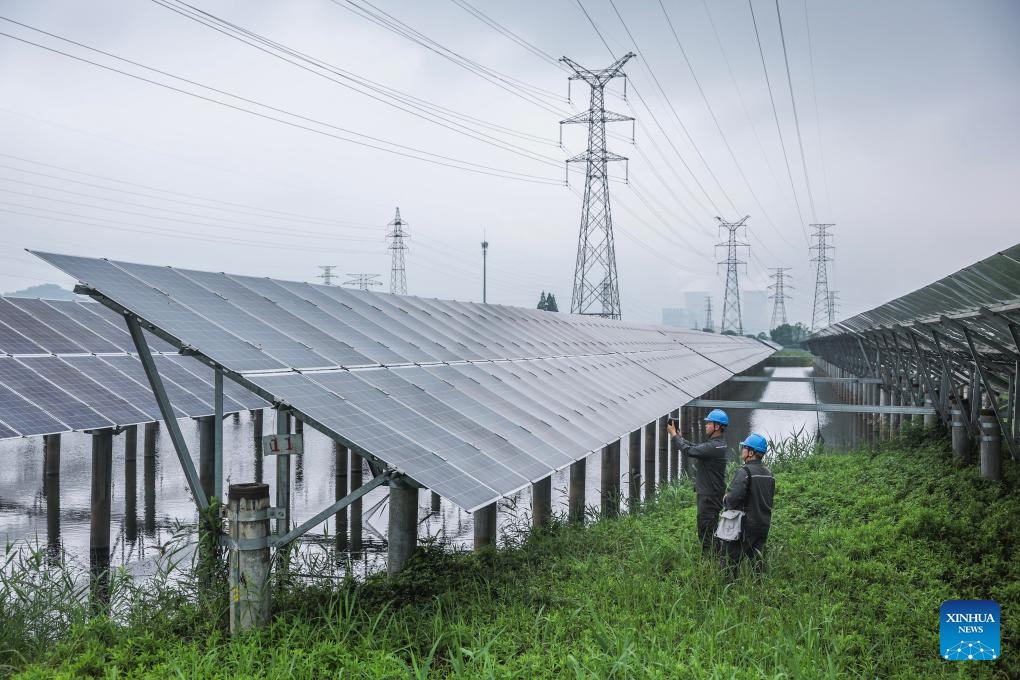
Eight Chinese leading polysilicon producers have issued public pledges to stop selling solar products below a cost benchmark, in a fresh industry effort to curb "involution-style" competition and support healthier pricing in the country's photovoltaic supply chain, the Shanghai Securities Journal reported on Friday.
Industry experts said that this move will not only help stabilize profits across the sector, but also promote the Chinese photovoltaics (PV) industry's shift toward high-quality development.
The eight companies jointly committed that the selling prices of all photovoltaic products, including tender bids, must not fall below the corresponding cost calculated under the group standard General Principles for Cost Accounting Models in the Photovoltaic Industry. Any sales below full cost must be "immediately stopped and corrected," according to the report.
The pledge was signed in Shanghai on Thursday by the companies, including four listed companies — Tongwei Solar Co, GCL Technology Holdings Limited, Daqo New Energy Co, Xinte Energy Co. The other four companies are Asia Silicon (Qinghai) Co, Xinjiang East Hope New Energy Co, Qinghai Lihao Qingneng Co, and Xinjiang Goens Energy Technology Co.
Together, the eight companies account for more than 90 percent of China's effective polysilicon production capacity, the Shanghai Securities Journal report said.
Under the initiative, the companies also agreed to accept supervision and inspections from market regulators at all levels and to strengthen mutual oversight. If they discover illegal below-cost sales, they are required to report the issue and file complaints with the industry association and the State Administration for Market Regulation (SAMR).
In addition, the firms committed to strictly implementing China's new energy-consumption standards and to proactively eliminate outdated, high-energy-consuming production capacity.
The move comes just one week after the SAMR held a solar industry price-compliance meeting on July 31, urging solar PV companies to strengthen price compliance and shift competition from price to quality.
It instructed companies to strengthen cost accounting, establish and improve price compliance systems, and carry out comprehensive self-inspections and corrective actions, according to the Xinhua News Agency.
Industry experts welcomed the initiative, saying that years of excessive competition have pushed many photovoltaic firms into losses, which is harmful to the industry's long-term development.
China's PV industry is mired in severe low-price competition, with profit margins squeezed along the entire value chain and many firms operating at a loss, Xiang Ligang, director-general of the Zhongguancun Modern Information Consumer Application Industry Technology Alliance, told the Global Times on Friday.
Xiang added that the initiative could help ensure more reasonable revenue and profit levels, which are essential for sustainable industrial development. The move also reflects a broader shift among Chinese firms toward greater coordination in responding to market pressures.
Although the industry also faces external challenges, including US tariffs on polysilicon-related products, Xiang said the main purpose of the initiative is to improve the sector's own development model rather than simply respond to foreign trade measures.
China has launched sweeping efforts to curb "involution-style" low-price competition and accelerate the phase-out of outdated industrial capacity. China's Ministry of Industry and Information Technology on July 3 held a symposium for manufacturing enterprises, focusing on accelerating the high-quality development of the photovoltaics industry, according to the Xinhua News Agency.
The symposium called for efforts to comprehensively deal with the problem of disorderly price competition in the photovoltaics industry in accordance with laws and regulations, as well as efforts to guide enterprises to improve product quality, phase out backward production capacities in an orderly manner and achieve healthy and sustainable development, Xinhua reported.
。5月狭义乘用车零售达193.8万辆,同比+13.7%,环比+10.0%,其中新能源全月零售102.7万,同比+28.9%,环比+12.7%,渗透率回升至53.0%。在以旧换新及报废更新“双新“政策的强有力支撑下,6月车市热度持续攀升。尽管部分区域补贴金额出现阶段性紧张,但经销商通过”末班车效应“营销反向刺激购买,进一步拉动车市增长。
。
二 |
Eight Chinese leading polysilicon producers have issued public pledges to stop selling solar products below a cost benchmark, in a fresh industry effort to curb "involution-style" competition and support healthier pricing in the country's photovoltaic supply chain, the Shanghai Securities Journal reported on Friday.
Industry experts said that this move will not only help stabilize profits across the sector, but also promote the Chinese photovoltaics (PV) industry's shift toward high-quality development.
The eight companies jointly committed that the selling prices of all photovoltaic products, including tender bids, must not fall below the corresponding cost calculated under the group standard General Principles for Cost Accounting Models in the Photovoltaic Industry. Any sales below full cost must be "immediately stopped and corrected," according to the report.
The pledge was signed in Shanghai on Thursday by the companies, including four listed companies — Tongwei Solar Co, GCL Technology Holdings Limited, Daqo New Energy Co, Xinte Energy Co. The other four companies are Asia Silicon (Qinghai) Co, Xinjiang East Hope New Energy Co, Qinghai Lihao Qingneng Co, and Xinjiang Goens Energy Technology Co.
Together, the eight companies account for more than 90 percent of China's effective polysilicon production capacity, the Shanghai Securities Journal report said.
Under the initiative, the companies also agreed to accept supervision and inspections from market regulators at all levels and to strengthen mutual oversight. If they discover illegal below-cost sales, they are required to report the issue and file complaints with the industry association and the State Administration for Market Regulation (SAMR).
In addition, the firms committed to strictly implementing China's new energy-consumption standards and to proactively eliminate outdated, high-energy-consuming production capacity.
The move comes just one week after the SAMR held a solar industry price-compliance meeting on July 31, urging solar PV companies to strengthen price compliance and shift competition from price to quality.
It instructed companies to strengthen cost accounting, establish and improve price compliance systems, and carry out comprehensive self-inspections and corrective actions, according to the Xinhua News Agency.
Industry experts welcomed the initiative, saying that years of excessive competition have pushed many photovoltaic firms into losses, which is harmful to the industry's long-term development.
China's PV industry is mired in severe low-price competition, with profit margins squeezed along the entire value chain and many firms operating at a loss, Xiang Ligang, director-general of the Zhongguancun Modern Information Consumer Application Industry Technology Alliance, told the Global Times on Friday.
Xiang added that the initiative could help ensure more reasonable revenue and profit levels, which are essential for sustainable industrial development. The move also reflects a broader shift among Chinese firms toward greater coordination in responding to market pressures.
Although the industry also faces external challenges, including US tariffs on polysilicon-related products, Xiang said the main purpose of the initiative is to improve the sector's own development model rather than simply respond to foreign trade measures.
China has launched sweeping efforts to curb "involution-style" low-price competition and accelerate the phase-out of outdated industrial capacity. China's Ministry of Industry and Information Technology on July 3 held a symposium for manufacturing enterprises, focusing on accelerating the high-quality development of the photovoltaics industry, according to the Xinhua News Agency.
The symposium called for efforts to comprehensively deal with the problem of disorderly price competition in the photovoltaics industry in accordance with laws and regulations, as well as efforts to guide enterprises to improve product quality, phase out backward production capacities in an orderly manner and achieve healthy and sustainable development, Xinhua reported.
。5月狭义乘用车零售达193.8万辆,同比+13.7%,环比+10.0%,其中新能源全月零售102.7万,同比+28.9%,环比+12.7%,渗透率回升至53.0%。在以旧换新及报废更新“双新“政策的强有力支撑下,6月车市热度持续攀升。尽管部分区域补贴金额出现阶段性紧张,但经销商通过”末班车效应“营销反向刺激购买,进一步拉动车市增长。
Current article:http://xzers5e.mexuanmeixuyaopinzheng.shop/list_q2yg9m/4fbav.html
Published on:20:02:07
- 744557Delhi High Court closes all proceedings against Delhi Health Minister Satyendar Jain under amended benami law
- 7066227SK海力士淘宝旗舰店下架所有产品 宣告9月终止经营
- 98854多地暂停非终止!2025国补面临二次启动 全国统一截止时间仍然是12月31日结束
- 9027886Cuba calls on US to lift trade embargo
- 563002克莱:迈阿密算是我第二故乡 在这我和巴哈马的亲人能更紧密联系
- 2309208中国男篮赴欧洲备战世预赛
- 72401【春場所新番付】三役昇進逃した若隆景、義ノ富士が東西前頭筆頭 藤青雲&藤凌駕新入幕/平幕編
- 1309581IOC suspends Russian Olympic Committee for incorporating Ukrainian sports regions
- 9742515莆田渔民高金全见义勇为 海中勇救落水男童
- 853OpenAI下调GPT-5.6 Sol模型价格,API与Credit费用降幅超20%
- 31041《Lanterns》第一季第2集评测与回顾
- 242509“特朗普竞选团队正积极考虑黑利作为竞选搭档”,法新社点名可能人选
- 1472《铁拳8》制作人:范马勇次郎不会输 输了是你玩的菜
- 178543飞碟亚锦赛中国队收获两金
- 8507195庄稼染金色 绘就丰收图
- 20590前期王位挑戦者・永瀬拓矢九段、今期リーグ2連勝! 羽生善治九段に最終盤で逆転
- 1513HWG!罗马诺:布伦特福德签21岁后卫迪乌夫,转会费总价4000万镑
- 3327205万事利:拟回购不低于2000万元且不超过3000万元公司股份
- 188931亚洲杯中国男排两连胜
- 472764西班牙“狼孩”去世,被狼群抚养12年,曾说重返人类社会最可怕
- 2460诚达药业:上半年归母净利润同比下降82.07%
- 203792Bitcontinent被称为重组业务,关闭了阿姆斯特丹办事处。
我的网站热门国内
- Copyright @ 2016-2017 我的网站 版权所有